Ready to Redefine What Divorce Looks Like?
Let’s talk about how to move forward without the fight.
Book Your Free Call Attend Our Divorce Webinar
Author : 
Co-parenting can become especially complicated when a child falls ill. Should the parenting schedule be followed exactly, or can one parent keep the child until they recover? In Georgia, the answer depends on the severity of the illness, the child’s comfort, and the willingness of both parents to communicate and cooperate in the child’s best interest.
Georgia law presumes that court-ordered parenting time should be followed, even when a child is sick. Each parent has the right—and responsibility—to care for their child during their designated time. Mild illnesses, like colds or minor fevers, typically do not justify withholding visitation. The law assumes both parents are equally capable of caring for a sick child unless proven otherwise.
If the child is simply under the weather but still able to travel safely, the parenting plan should be followed.
That said, common sense and compassion also have a place in co-parenting. If a child is so sick that transferring them would cause significant discomfort—such as vomiting during the car ride—or if the illness poses a risk of contagion or complications, it may be reasonable to delay the transition between homes.
This is particularly true for:
Severe gastrointestinal illness
Post-surgical recovery (e.g., after a tonsillectomy)
High fever with extreme fatigue
In these cases, a temporary change to the schedule may serve the child’s well-being best.
Ideally, both parents can communicate openly and agree on temporary adjustments to the parenting schedule. That might mean:
Postponing a handoff by a day or two
Allowing the sick child to stay with the parent best equipped to care for them during recovery
Making up missed time later, if desired
Parents should aim to prioritize the child’s comfort and recovery while respecting each other’s rights. Written communication (via text or email) can help document the agreement in case disputes arise.
Unfortunately, not all co-parents see eye to eye. If one parent believes the child is too ill to transition homes, and the other insists on enforcing the schedule, tensions can escalate. In these situations:
Seek medical input: Ask the child’s doctor whether travel or transitioning homes poses any risk.
Document everything: Keep records of symptoms, doctor notes, and communication with the other parent.
Avoid violating the order: Unless there is a legitimate safety concern, withholding parenting time can lead to legal consequences.
When in doubt, it’s always best to consult your attorney or request a modification to the parenting plan if disagreements become chronic.
Our team helps parents navigate sensitive parenting time issues with empathy and legal clarity through our child custody services.
Schedule a discovery call to learn how we can support you.

Jeanette Soltys, Esq. is the founder of Atlanta Holistic Family Law and a Certified Amicable Divorce Professional. A graduate of Wake Forest Law with nearly two decades of experience, she is a member of the Amicable Divorce Network and is a multi-year Super Lawyers honoree.
Let’s talk about how to move forward without the fight.
Book Your Free Call Attend Our Divorce Webinar
The Short Version: In a high-conflict divorce, at least one spouse, or one lawyer, treats every disagreement as a battle to be...

The Short Version: Georgia has no law that starts custody at 50/50. Under O.C.G.A. § 19-9-3 there is no prima-facie right to...
Mediation and collaborative divorce both keep your divorce out of court, but the withdrawal rule makes one of them far riskier. A Marietta family law attorney explains the differences and a third path most people have never heard of.

An amicable divorce does not mean being friends or agreeing on everything. Learn what it means, how the Amicable Divorce Process works, and when it fits.
The Short Version: Most people think divorce means a courtroom fight. It usually does not have to. Alternative dispute resolution, or ADR,...

If you are getting divorced, one of the first and most consequential decisions you will make has nothing to do with the...
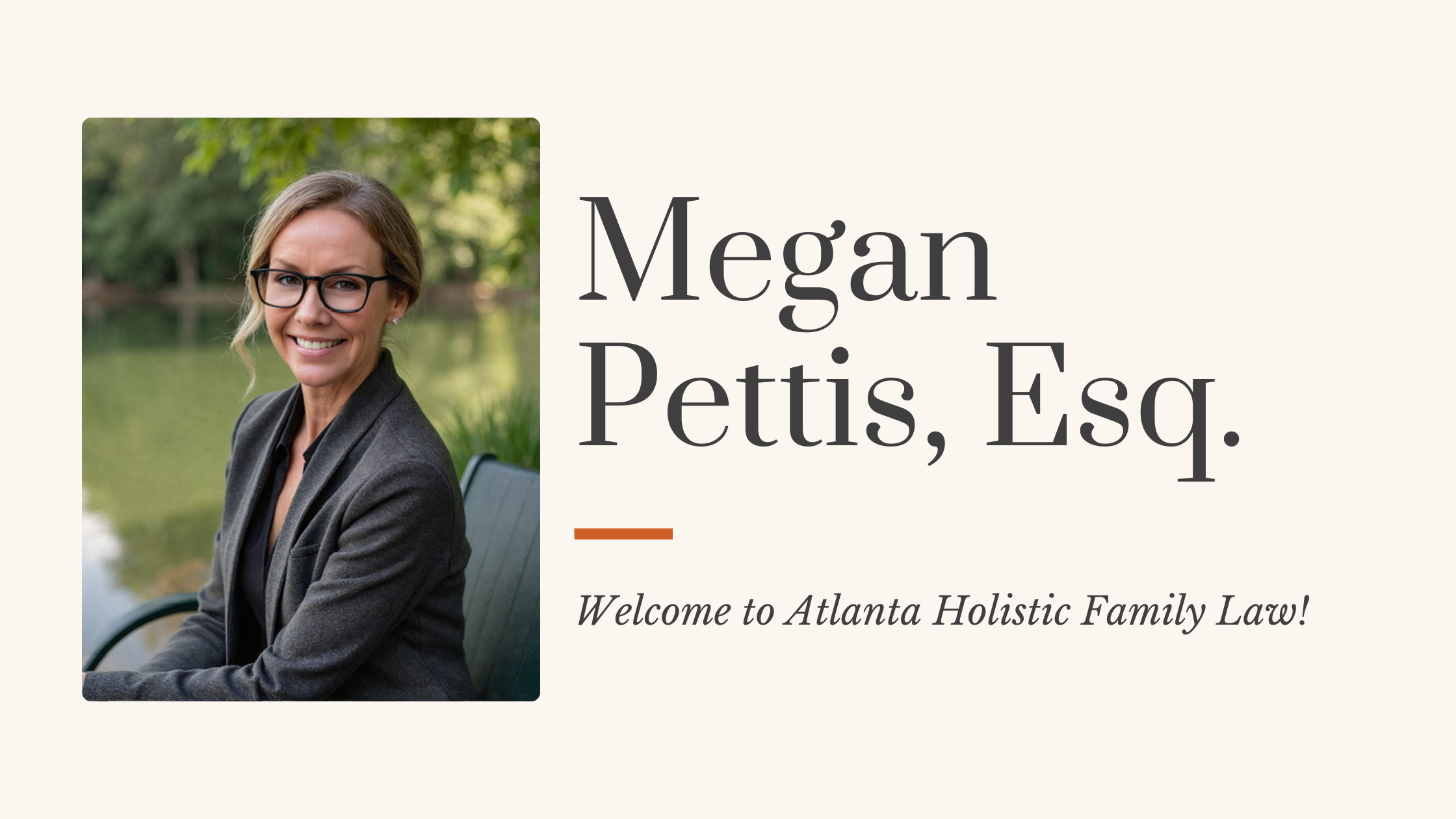
We are excited to announce that Megan Pettis, Esq. has joined our team. Megan brings a rare combination of law enforcement experience,...
Let’s talk. We’ll listen to your situation and help you take the next best step.