Ready to Redefine What Divorce Looks Like?
Let’s talk about how to move forward without the fight.
Book Your Free Call Attend Our Divorce Webinar
Author : 
Legal custody is one of the most important aspects of a parenting plan after divorce or separation. Understanding how legal custody works in Georgia can help parents approach this part of the process with greater clarity, collaboration, and confidence—especially when children’s wellbeing and access to education, healthcare, and stability are at stake.
In Georgia, legal custody refers to a parent’s right to make major decisions about a child’s upbringing. This includes access to records, input on important life choices, and a seat at the table when it comes to a child’s:
Education
Medical care
Religious involvement
Extracurricular activities
Legal custody is different from physical custody, which determines where a child lives day to day. Both types of custody are addressed during divorce or custody proceedings and outlined in the final parenting plan.
Yes. In most Georgia family law cases, courts award joint legal custody to both parents. This means each parent has the right—and the responsibility—to participate in making significant decisions about their child’s life.
Joint legal custody encourages cooperation and shared responsibility, but it also requires a framework for resolving disagreements. That’s where final decision-making authority comes in.
Even with joint legal custody, Georgia law requires that one parent be given final decision-making authority in each major area. This does not mean the other parent is excluded. Both are expected to discuss decisions in good faith. However, if they cannot agree, the designated parent becomes the “tiebreaker.”
Final decision-making authority can be assigned to one parent for all areas, or it can be split by category:
Medical (non-emergency decisions like treatment plans or medications)
Education (school choice, special education decisions)
Extracurricular activities (sports, clubs, lessons)
Religion (upbringing and faith-based practices)
Parents often split these categories based on their strengths or preferences. For example, one parent may have final say in education, while the other handles medical matters.
The parent with the child during an emergency has the authority to make urgent medical decisions without the other parent’s consent. Final decision-making authority only applies to non-emergency, long-term decisions, such as whether to begin a course of medication for ADHD.
Religion is often included in custody orders, but it’s typically not a point of conflict. Georgia courts recognize that both parents can practice their chosen religion with the child during their parenting time. One parent having final authority over religious decisions does not allow them to control the other parent’s religious practices.
Parents sometimes agree to limit their own authority in this area by allowing each parent to enroll the child in one activity per season. This can reduce conflict and encourage balance in the child’s schedule.
Still, if no agreement is reached, the parent with final decision-making authority in the extracurricular category will have the power to make the call.
Legal custody arrangements are not one-size-fits-all. The courts prefer when parents create a clear and specific parenting plan that outlines how legal custody and final decision-making will work. This prevents future conflict and supports a stable environment for children to grow and thrive.
Our child custody services guide families through this important process with empathy, clarity, and a focus on long-term wellbeing.
Schedule a discovery call to learn how we can support you.

Jeanette Soltys, Esq. is the founder of Atlanta Holistic Family Law and a Certified Amicable Divorce Professional. A graduate of Wake Forest Law with nearly two decades of experience, she is a member of the Amicable Divorce Network and is a multi-year Super Lawyers honoree.
Let’s talk about how to move forward without the fight.
Book Your Free Call Attend Our Divorce Webinar
The Short Version: In a high-conflict divorce, at least one spouse, or one lawyer, treats every disagreement as a battle to be...
The Short Version: Georgia has no law that starts custody at 50/50. Under O.C.G.A. § 19-9-3 there is no prima-facie right to...
Mediation and collaborative divorce both keep your divorce out of court, but the withdrawal rule makes one of them far riskier. A Marietta family law attorney explains the differences and a third path most people have never heard of.

An amicable divorce does not mean being friends or agreeing on everything. Learn what it means, how the Amicable Divorce Process works, and when it fits.
The Short Version: Most people think divorce means a courtroom fight. It usually does not have to. Alternative dispute resolution, or ADR,...

If you are getting divorced, one of the first and most consequential decisions you will make has nothing to do with the...
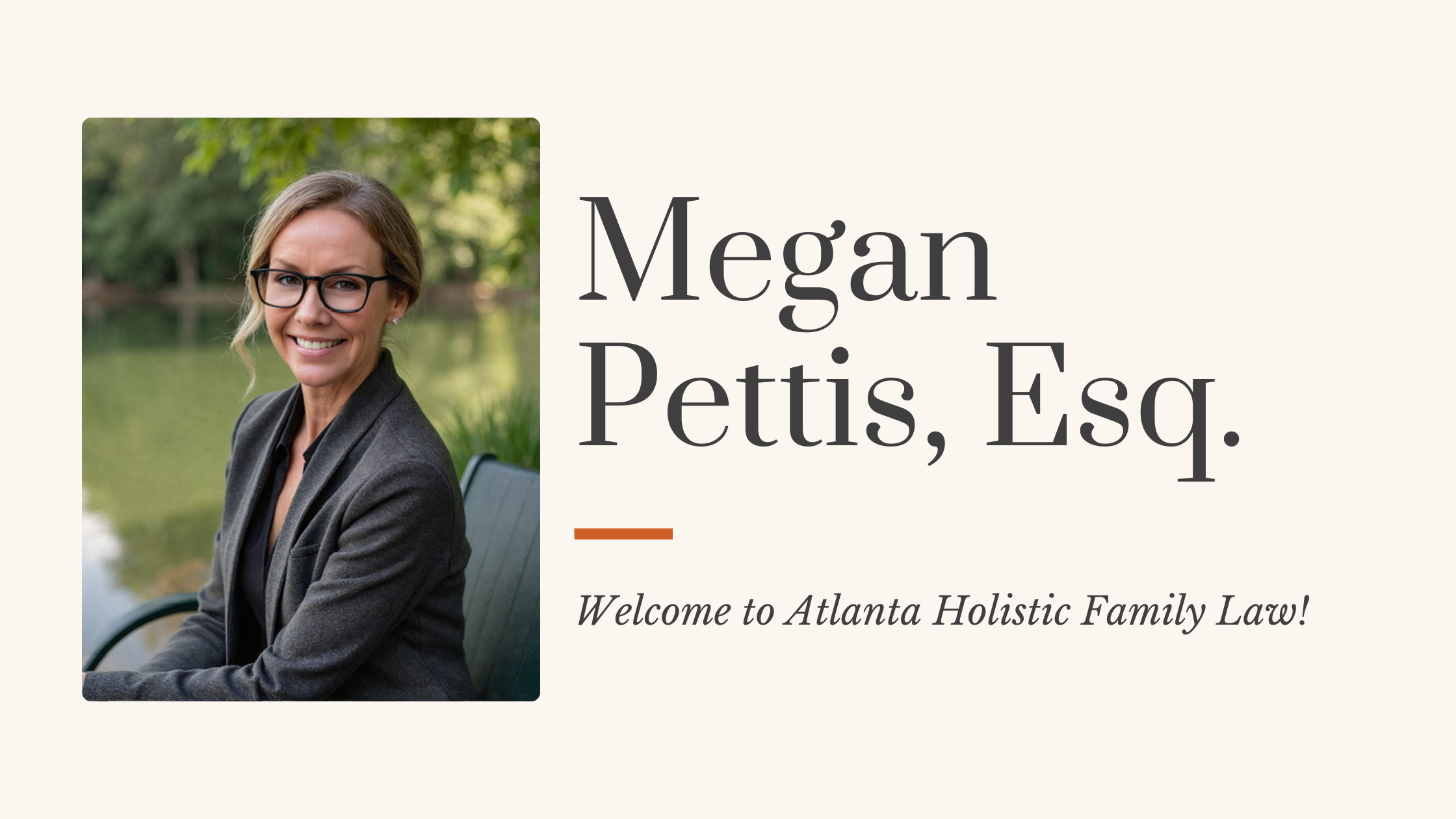
We are excited to announce that Megan Pettis, Esq. has joined our team. Megan brings a rare combination of law enforcement experience,...
Let’s talk. We’ll listen to your situation and help you take the next best step.