Ready to Redefine What Divorce Looks Like?
Let’s talk about how to move forward without the fight.
Book Your Free Call Attend Our Divorce Webinar
Author : 
The Short Version: Most people think divorce means a courtroom fight. It usually does not have to. Alternative dispute resolution, or ADR, is a set of structured ways to settle divorce issues outside of court. The main tools are the Amicable Divorce Process, mediation, collaborative divorce, and arbitration. Each one gives you more control over the outcome, usually costs less than litigation, and tends to be far less stressful for both spouses and any children. ADR is not only for simple cases, and it is not right for every case. When a spouse is hiding assets, refusing to participate honestly, or creating safety risks, family court may still be necessary. The goal is not to force peace. It is to know which tools exist and use the ones that actually fit your family.
When people come to me thinking about divorce, many of them believe they have only two options. Fight it out in court, or give up what matters to them. That is a false choice. In twenty years of family law practice here in Georgia, I have seen most divorces resolved without a trial, and the people who get there usually keep more of their money, their privacy, and their sanity.
The path to that outcome has a name. It is called alternative dispute resolution, and it is worth understanding before you assume your only road runs through a courtroom.
Alternative dispute resolution in divorce simply means structured ways of resolving your issues outside of court. Different tools work for different situations. The right one depends on your goals, the level of trust between you and your spouse, and whether both people can participate in good faith.
A true uncontested divorce, where both spouses already agree on the major terms, is the simplest version of this. But ADR covers far more ground than that. Whether you are heading toward an uncontested divorce or a contested divorce, these tools give you a way to handle real disagreements about property, support, and parenting without handing every decision to a judge.
One misconception I hear often is that resolving a divorce without court only works when there is not much to divide. That is not true. These tools can work very well even when there is a large marital estate, a business, complicated compensation, or a serious concern involving the children.
In those situations, the parties can agree to bring in neutral experts. A forensic accountant can value a business or explain the tax consequences of different property division options. Parents can build in safeguards, such as a substance abuse assessment with ongoing testing shared between them. The case does not have to be easy. What matters is that both sides are committed to the process, willing to exchange information honestly, and open to reasonable compromise.
Even in a lower-conflict process, the likely court outcome still matters. When two people hit a real sticking point, each side is usually weighing the offer on the table against what a judge or arbitrator would probably do, including the cost, the delay, and the uncertainty of getting there.
That is actually where a good divorce settlement comes from. The sweet spot is often the point where both sides see some risk in pushing forward. The agreement lands within the range of likely outcomes, but you and your spouse still get to shape the details, protect what matters most, and decide where you are willing to give. The result is a settlement agreement you helped build, not an order handed down to you.
An amicable divorce does not mean you and your spouse are friends or agree on everything. It means you are both willing to resolve things reasonably and outside of court. In the formal Amicable Divorce Process, each spouse hires an attorney who belongs to the Amicable Divorce Network, a group of professionals vetted for being resolution focused with reasonable fees. You may also work with financial experts or mental health professionals, so it often becomes a team approach.
The goal is to reach a full, signed settlement agreement before anything is filed with the court. For many divorcing couples it is more efficient, less expensive, and far less draining than going straight into litigation. The biggest advantages are usually clear. It tends to cost less. You and your spouse keep more control over the pace and the outcome. And it is easier on the adults and the children alike.
It is not right for every case. If your spouse refuses to participate honestly, hides money, is abusive, or creates serious safety concerns, court intervention may be necessary. That is exactly why it helps to have a lawyer who knows the difference. For many families, though, it is a very good place to start.
Mediation is a form of alternative dispute resolution in which a neutral third party helps spouses try to reach an agreement. The mediator is not a judge and does not decide the outcome. The mediator’s role is to guide the conversation, identify the real issues, and move both sides toward resolution.
One important point. A mediator cannot give either spouse legal advice. They cannot tell you what terms are best for you or what rights you may be giving up. If you want advice about your best options, you need your own lawyer.
The mediation process usually happens one of two ways. The spouses attend together and each brings a lawyer, or they hire a mediator and attend without lawyers. Mediation without lawyers can work for the right couple, but it fits a fairly small group of people. It works best when both spouses have already talked through most of the terms, agree on the vast majority of issues, and just need help with a few remaining points. It is usually not a good fit when one spouse may be hiding income or assets, when the two of you cannot communicate at all, or when there is a significant power imbalance, such as one spouse being financially dependent on the other. Mediation is also confidential, so what you work through generally stays out of the public court record. Even if you mediate without lawyers, you can still have an attorney review the settlement agreement before you sign.
Collaborative divorce, sometimes called collaborative law, is another out-of-court option. Each spouse has their own attorney, and everyone signs an agreement to resolve the case without going to court.
For the right family, it can work well. There is one important downside to understand. If the collaborative divorce process fails and someone decides court is necessary, both attorneys have to withdraw. Both spouses then hire new lawyers and start over with people who have to learn the entire case from scratch, which gets expensive and frustrating. It can also create a difficult dynamic if one spouse is not negotiating in good faith. For that reason, many families find the more flexible Amicable Divorce Process a better fit, because it offers the same cooperative spirit without the built-in risk of losing your lawyer.
Divorce arbitration is more formal than mediation. A neutral third party, often a retired judge or experienced attorney, hears both sides and makes a decision. That decision is usually binding, though some couples agree to non-binding arbitration to get a neutral read on a disputed issue without locking themselves in. Arbitration can be a good option for people who want a confidential process and a faster resolution than court, but who still need someone else to make the final call.
A few other tools are worth knowing. A settlement conference brings both sides together, often with their lawyers and sometimes a neutral, to push toward an out-of-court settlement before trial. In early neutral evaluation, sometimes called neutral case evaluation, an experienced neutral reviews the facts and gives a non-binding opinion of the likely outcome, which can move a stuck negotiation forward. Parenting coordination helps parents with ongoing conflict resolve day-to-day disputes about schedules and routines before they turn into constant legal battles.
You do not have to pick one tool and stick with it the whole way. A case in the Amicable Divorce Process might go to mediation, and the parties might then send only the few unresolved issues to arbitration for a final decision. Even with multiple steps, that approach is usually much less expensive and less stressful than traditional divorce litigation.
I want to be honest about the limits. Not every family is a good fit for resolving a divorce without court. If there is abuse, a history of domestic violence, serious coercion, or a major power imbalance, the more formal protections of family court may be necessary, and a good attorney will tell you so. The point of ADR is not to force every case into a peaceful process. It is to use the tools that fit your situation and to recognize when court is the one that does.
You do not need to become an expert in all of these options or pick the right one on your own. Part of the value of working with a holistic family law attorney is having someone who understands these tools and can help you choose the path that makes the most sense for you.
These tools are also a topic I cover in my book, Holistic Divorce: A Calmer, Smarter Way to End Your Marriage Without Falling Apart, Going Broke, or Messing Up Your Kids.
If you are facing a divorce in Georgia and you want to understand your options beyond the courtroom, Atlanta Holistic Family Law can help you weigh them with strategy and judgment, and firmness where the case calls for it. Schedule a consultation to talk through your situation.

Jeanette Soltys, Esq. is the founder of Atlanta Holistic Family Law and a Certified Amicable Divorce Professional. A graduate of Wake Forest Law with nearly two decades of experience, she is a member of the Amicable Divorce Network and is a multi-year Super Lawyers honoree.
Let’s talk about how to move forward without the fight.
Book Your Free Call Attend Our Divorce Webinar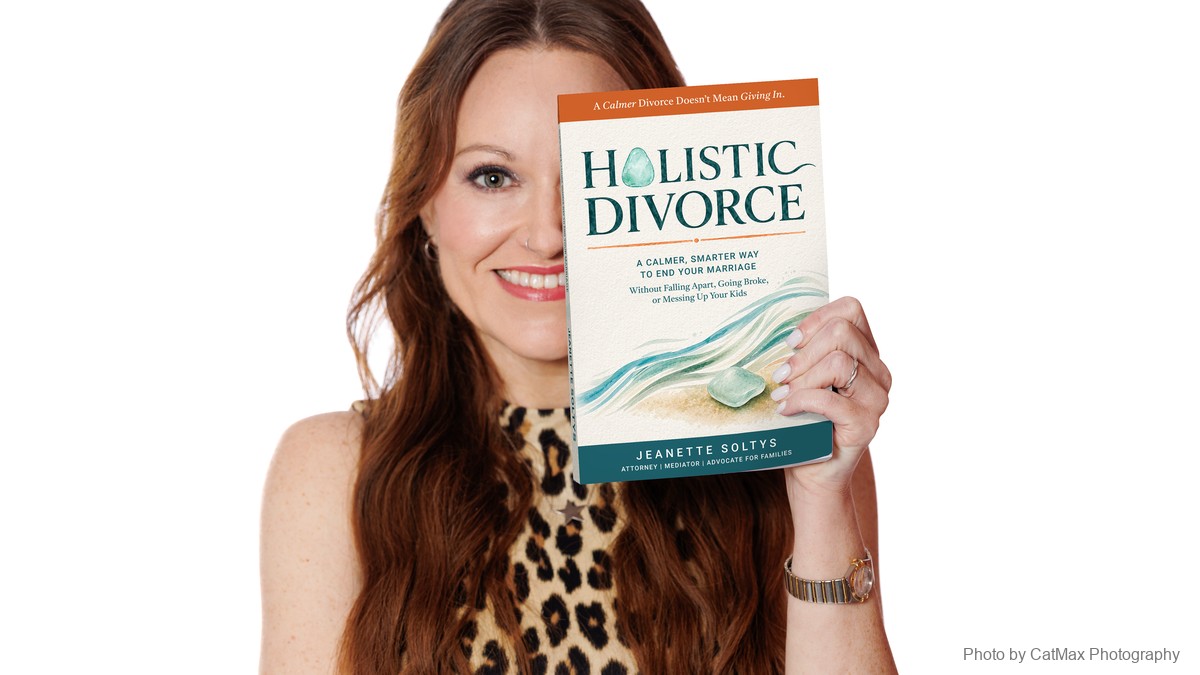
The Short Version: My book, Holistic Divorce: A Calmer, Smarter Way to End Your Marriage Without Falling Apart, Going Broke, or Messing...

The Short Version: In a high-conflict divorce, at least one spouse, or one lawyer, treats every disagreement as a battle to be...

The Short Version: Georgia has no law that starts custody at 50/50. Under O.C.G.A. § 19-9-3 there is no prima-facie right to...
Mediation and collaborative divorce both keep your divorce out of court, but the withdrawal rule makes one of them far riskier. A Marietta family law attorney explains the differences and a third path most people have never heard of.

An amicable divorce does not mean being friends or agreeing on everything. Learn what it means, how the Amicable Divorce Process works, and when it fits.
The Short Version: Most people think divorce means a courtroom fight. It usually does not have to. Alternative dispute resolution, or ADR,...

If you are getting divorced, one of the first and most consequential decisions you will make has nothing to do with the...
Let’s talk. We’ll listen to your situation and help you take the next best step.