Ready to Redefine What Divorce Looks Like?
Let’s talk about how to move forward without the fight.
Book Your Free Call Attend Our Divorce Webinar
Author : 
The Short Version: Mediation and collaborative divorce both resolve a divorce outside the courtroom, but they work very differently. In mediation, a neutral mediator helps you and your spouse negotiate your own agreement, with or without lawyers in the room, and nothing is decided for you. In collaborative divorce, each spouse hires a lawyer trained in collaborative law and everyone signs a pledge to stay out of court. That pledge carries a catch. If the collaborative process fails, both attorneys must withdraw and you start over with new lawyers midway through your case. Mediation is the more flexible and affordable path for most Georgia families, and I rarely recommend traditional collaborative divorce. A third option, the amicable divorce process, blends the strengths of both.
If you want to end your marriage without a court battle, you have more than one way to get there. Mediation and collaborative divorce are the two out-of-court options people ask me about most, and they get confused with each other constantly. Both fall under the umbrella of alternative dispute resolution, the family of tools I walked through in my guide to your divorce options beyond the courtroom. Both keep the decisions in your hands instead of a judge’s. But the two processes are structured differently, and they carry very different risks if things break down.
I have guided families through both processes at my Marietta family law practice. Understanding the differences between collaborative divorce and mediation before you commit can save you money, months of frustration, and in some cases a second set of legal fees.
Mediation is a process where a neutral third party, called the mediator, helps the two of you talk through the issues in dispute and work toward a final settlement agreement. The mediator does not take sides and does not make decisions for you. Any agreement you reach is voluntary.
Most Georgia divorces involving children or assets end up in front of a mediator at some point, even cases already in litigation. Nearly every metro Atlanta county requires the parties to try divorce mediation before the court will schedule a final hearing. So whether you choose that path or a judge orders it along the way, expect to sit in at least one mediation session before your case is over.
Offers made in mediation are confidential under Georgia law and cannot be shared with the judge, with a narrow exception for attorney fees. That confidentiality exists so both sides can negotiate in good faith without an offer being used against them later. Participating also does not waive your right to go to court. If the talks fail, your case moves forward, and you keep the attorney who already knows it.
A divorce mediator cannot give you legal advice, even if the mediator is also a lawyer. They cannot tell you what a judge would likely do with your child custody, child support, spousal support, or property division questions. That is your own attorney’s job. A family law attorney advises you on your rights, helps you weigh each settlement option against the likely outcome in court, and reviews the agreement before you sign. Once signed, a mediated settlement agreement is legally binding. You cannot change your mind later unless the agreement gives you a written revocation window, which is included when one side needs time for an attorney review.
Some couples attend mediation without attorneys at all. That works well when both people have already agreed to move forward, both are willing to exchange financial information openly, neither holds a serious power advantage over the other, and neither desire legal advice. It is not appropriate where there is domestic violence, hidden money, or a large gap in financial knowledge. If you go this route, I recommend building a review period into any divorce agreement you sign so a lawyer can look at it before it becomes binding.
Most of the mediation sessions we handle at Atlanta Holistic Family Law happen over Zoom, and most people choose to stay in separate virtual rooms the whole day, speaking freely with the mediator instead of facing their spouse directly. That separation, called a caucus, is available in person too.
The mediator opens the session by explaining the ground rules, including confidentiality and the limits on legal advice. They then spend time with each person learning the background, identifying goals, and narrowing the divorce issues in dispute. From there, the mediator carries proposals between the rooms, tests solutions, and helps both sides shape an agreement they can live with.
Plan for a full day. Cases with disagreements over both children and assets, or with a large marital estate, can take eight hours or more, and the hardest cases sometimes need a second session. The vast majority of cases settle fully in mediation, which is one reason settling your divorce outside of court is almost always worth attempting first. When a case does not settle, it goes to a judge, unless both sides agree to binding arbitration. Mediators and arbitrators are both neutral third parties, but only the arbitrator makes a binding decision, privately and on your schedule.
Collaborative divorce is built on a formal commitment. You and your spouse each hire specially trained collaborative attorneys, and everyone signs a participation agreement promising to resolve the case without litigation. The work happens in structured meetings, and the team can grow to include a divorce coach for each spouse and a neutral financial professional.
Both of you stay represented from start to finish, the case stays private, and settlement is built into the structure of the collaborative process itself. For the right family, it can work well, and it beats traditional divorce litigation on privacy and stress.
The defining rule of collaborative divorce can also be its biggest weakness. If the process fails and either spouse decides court is necessary, both collaborative attorneys must withdraw. Both then hire new lawyers who have to learn the entire case from scratch.
The rule was designed with good intentions. When going to court means losing the lawyers who have been working the case, everyone has a strong incentive to stay at the table and keep problem-solving.
In practice, I have seen the downside, and many other divorce attorneys have seen it too. The same rule that is supposed to encourage settlement can hand one spouse enormous power to stall. If one person refuses to engage honestly, withholds financial information, or will not make decisions, the other spouse is trapped. They can keep paying for divorce negotiations that are going nowhere, or they can walk away and lose the divorce lawyer who already knows their case.
Cost is the second concern. Some practitioners expect two divorce coaches and a financial neutral in every case, whether or not the family needs that level of support. Collaborative professionals earn their fees in the right case. In a case with straightforward finances, they can make the collaborative divorce process more expensive and more cumbersome than the situation requires. I have written before about the true cost of divorce in Georgia, and unnecessary professional fees are one of the most avoidable pieces of it.
For those reasons, I rarely recommend traditional collaborative divorce.
Who guides the process is the first difference. Mediation runs through a neutral who guides the conversation but represents neither spouse. The collaborative model runs through two collaborative lawyers, each advocating for their own client inside a settlement-only framework.
The commitment you sign is the second. Mediation asks for no pledge at all. You can mediate on Tuesday and still go to court on Friday, with the same lawyer beside you. The collaborative route begins with a signed agreement to stay out of court, enforced by the withdrawal rule.
Cost follows from structure. Mediation costs are contained. You pay the mediator for the session, plus your own attorney if you bring one. Collaborative divorce and mediation diverge here because the collaborative side involves two attorneys across multiple meetings, and the bill grows with each professional added to the team.
The exit is the difference I weigh most heavily. When mediation fails, you lose a day and the mediator’s fee. When a collaborative divorce fails, you lose both attorneys and start over.
For most Georgia families weighing these two paths, mediation comes out ahead. A mediated divorce fits when you want control over the pace and the expense, and when both of you are willing to exchange information honestly. You also keep your own lawyer no matter how the talks end. Since nearly every metro Atlanta county will send you to mediation before trial anyway, building your settlement plan around it wastes nothing.
Mediation has limits. Where one spouse is hiding assets or holds coercive power over the other, court protections exist for a reason, and a settlement-focused process should not be forced onto a situation that is not safe for it.
Collaborative divorce may make sense for a family where both people are committed to full transparency and want the heavy professional support built into the process, and where the budget can absorb the full team. If you and your spouse are certain neither of you will use the withdrawal rule as leverage, the structure of collaborative law can feel reassuring. My concern is that no one can be certain of that at the start of a divorce, which is exactly when spouses know each other’s intentions least.
I usually recommend a third option that most people have never heard of. The amicable divorce process combines the flexibility of mediation with the full representation of the collaborative model, without the withdrawal rule. Both sides hire attorneys who belong to the Amicable Divorce Network, trained in resolution-focused negotiation and vetted for reasonable fees. The goal is a full, signed divorce settlement before anything is filed with the court. Mediation is frequently part of the process, and the family adds financial or mental health professionals only when the case calls for them.
The two of you can disagree on plenty and still divorce amicably. The process asks for a willingness to resolve things reasonably and to keep control of the outcome instead of handing it to a judge.
You do not need to become an expert in mediation and collaborative law or pick the perfect divorce method on your own. Part of the value of hiring a holistic family law attorney is having someone who knows these tools, has watched each one succeed and fail, and can tell you whether mediation or collaborative divorce fits your case, your finances, and your level of trust with your spouse. I have written about why court should be your last resort in family law cases, and choosing the right settlement process at the start is what keeps you out of the courtroom at the end.
Both processes are also topics I cover in my book, Holistic Divorce: A Calmer, Smarter Way to End Your Marriage Without Falling Apart, Going Broke, or Messing Up Your Kids.
If you are considering divorce in Marietta, East Cobb, or anywhere in metro Atlanta, contact my office. We will talk through your situation and recommend the process that fits your family and your budget.

Jeanette Soltys, Esq. is the founder of Atlanta Holistic Family Law and a Certified Amicable Divorce Professional. A graduate of Wake Forest Law with nearly two decades of experience, she is a member of the Amicable Divorce Network and is a multi-year Super Lawyers honoree.
Let’s talk about how to move forward without the fight.
Book Your Free Call Attend Our Divorce Webinar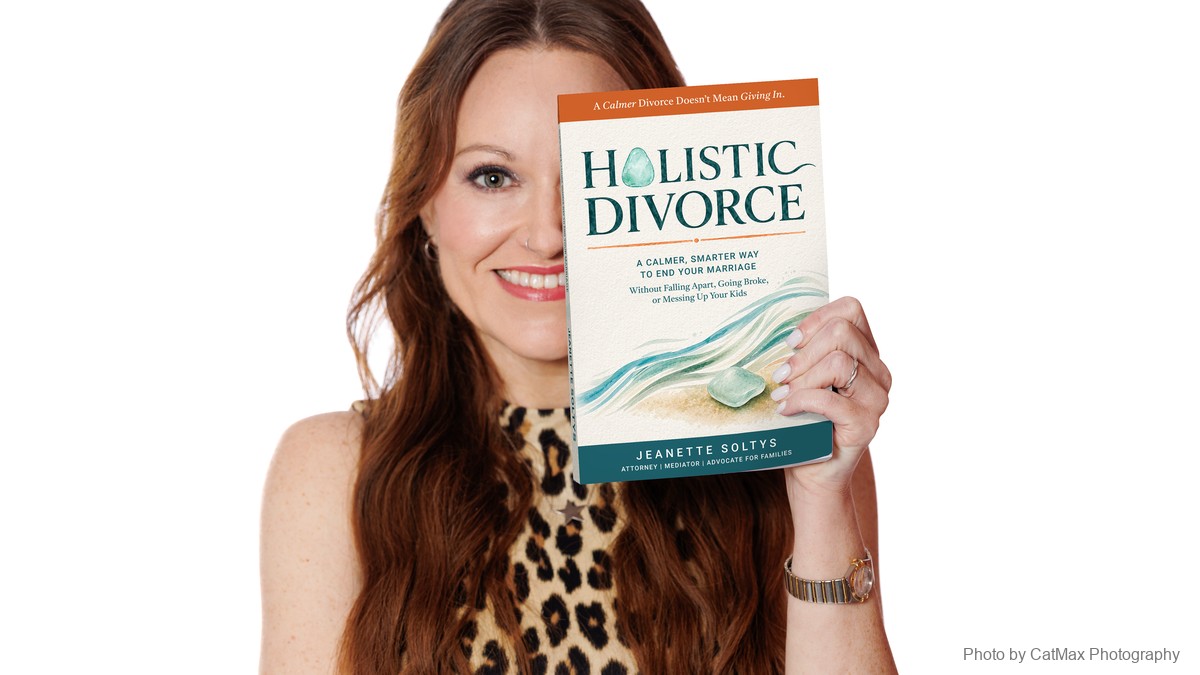
The Short Version: My book, Holistic Divorce: A Calmer, Smarter Way to End Your Marriage Without Falling Apart, Going Broke, or Messing...

The Short Version: In a high-conflict divorce, at least one spouse, or one lawyer, treats every disagreement as a battle to be...
The Short Version: Georgia has no law that starts custody at 50/50. Under O.C.G.A. § 19-9-3 there is no prima-facie right to...
Mediation and collaborative divorce both keep your divorce out of court, but the withdrawal rule makes one of them far riskier. A Marietta family law attorney explains the differences and a third path most people have never heard of.

An amicable divorce does not mean being friends or agreeing on everything. Learn what it means, how the Amicable Divorce Process works, and when it fits.
The Short Version: Most people think divorce means a courtroom fight. It usually does not have to. Alternative dispute resolution, or ADR,...

If you are getting divorced, one of the first and most consequential decisions you will make has nothing to do with the...
Let’s talk. We’ll listen to your situation and help you take the next best step.